As a first step, you need to work out what you have got. Are there any check valves for instance ? If you can't work it out, post some photos of key bits - the valvegear on your internal tank is probably the easiest to start with - and someone here will probably be able to recognise it.
Then, work out how it's wired - this will have a significant impact on how easy it is to test.
If the solenoid valves are separately wired to one point or there's a convenient means of disconnecting each valve or there's a manual shutoff on each tank, then things are relatively simple. Disconnect/shutoff all but one solenoid valve and see if you still get a gas supply. First, you should disconnect/turn them all off and check that you no longer get gas - otherwise you'll not get any information from the rest of the tests.
If things aren't that convenient then you'll still need to disconnect/disable the output from all the tanks - this may mean cutting wires and rejoining them later, removing the coil from the solenoid valve, or even emptying the tank, disconnecting the pipework, and blanking off it's connections and the pipe ends.
Bear in mind that the pipework, filter, etc can hold enough gas to make the engine run for a surprising time !
As an alternative to seeing if the engine will run (at reasonable power, not just idle) is to disconnect the feed pipe from the reducer and point it out into the open. Connect a pair of wires to the gas valve wiring and chassis, retreat to a distance upwind, and touch the wires onto a battery. You should get "quite a blast" of gas from the pipe end.
Be very, very careful as you'll be creating a cloud of explosive (and smelly) gas mixture. Do it on a reasonably breezy day (so it disperses quickly), and not upwind of the neighbours.
EDIT: Also, be careful where you point it. As well as being highly flammable, the gas/liquid mix spraying out the end of the pipe will be around -40˚ - ie quite cold enough to cause damage or injury (frost burns). The pipework will also be dangerously cold afterwards - so let it thaw out (you'll see the frost melt) before you try and do anything with it.
Sneezing LPG tanks - no idea where to begin!
-
SimonHobson
- Intermediate Member
- Posts: 1125
- Joined: Sat Aug 23, 2008 6:39 pm
- Location: Cumbria
- Contact:
Re: Sneezing LPG tanks - no idea where to begin!
Land Rover 110 V8 LPG
Land Rover 90 petrol (no longer diseasel :D), still awaiting V8 & LPG
http://www.diy-lpg.co.uk
Land Rover 90 petrol (no longer diseasel :D), still awaiting V8 & LPG
http://www.diy-lpg.co.uk
Re: Sneezing LPG tanks - no idea where to begin!
Morning Mr Hobson, How do i check that each stage is getting a 'gas supply' is it a case of just crack each connection and hear a hiss ?
Re: Sneezing LPG tanks - no idea where to begin!
Had a proper look this morning and im uploading pictures as we speak but basically its @!##. For now i just want to get it running on LPG and not do anything to interfering. Ive managed to snap a camshaft in the girlfriends car this weekend so were down to one car - and 50p a mile in mine isnt a good thing.
SOO, It looks like at least 2 people have been involved in my LPG kit but its not immediatley clear which tank is the retro fitted one. The wiring is a mess, big clumps of messy solder, no heat shrink, wires to short to follow around radius nicely etc so im defo going to re wire it one day. The orignal wiring is nice, come nicely from the solenoid under the bonnet, ziptied nice + neatly to the hose all the way to the rear axel, there is then a 2nd solenoid wire that comes a completely different route - its this one i dont like but anyway.
The 2 torperdo tanks do have solenoids but could see solenoids anywere else.
The car ran on LPG after its swimming lesson. I took all the interior out etc, put it all back in and now it doesnt work - Ive got to off dislodged something for it to not run on LPG now. Just disconnected the hose before the stepper motor and supplied 12v to the solenoids but couldnt smell any gas coming out of the hose. Is this normal - my main concern is get the thing running on LPG again.
SOO, It looks like at least 2 people have been involved in my LPG kit but its not immediatley clear which tank is the retro fitted one. The wiring is a mess, big clumps of messy solder, no heat shrink, wires to short to follow around radius nicely etc so im defo going to re wire it one day. The orignal wiring is nice, come nicely from the solenoid under the bonnet, ziptied nice + neatly to the hose all the way to the rear axel, there is then a 2nd solenoid wire that comes a completely different route - its this one i dont like but anyway.
The 2 torperdo tanks do have solenoids but could see solenoids anywere else.
The car ran on LPG after its swimming lesson. I took all the interior out etc, put it all back in and now it doesnt work - Ive got to off dislodged something for it to not run on LPG now. Just disconnected the hose before the stepper motor and supplied 12v to the solenoids but couldnt smell any gas coming out of the hose. Is this normal - my main concern is get the thing running on LPG again.
Last edited by Bigwilly1 on Sat Mar 02, 2013 12:29 pm, edited 1 time in total.
Re: Sneezing LPG tanks - no idea where to begin!
Boot tank-
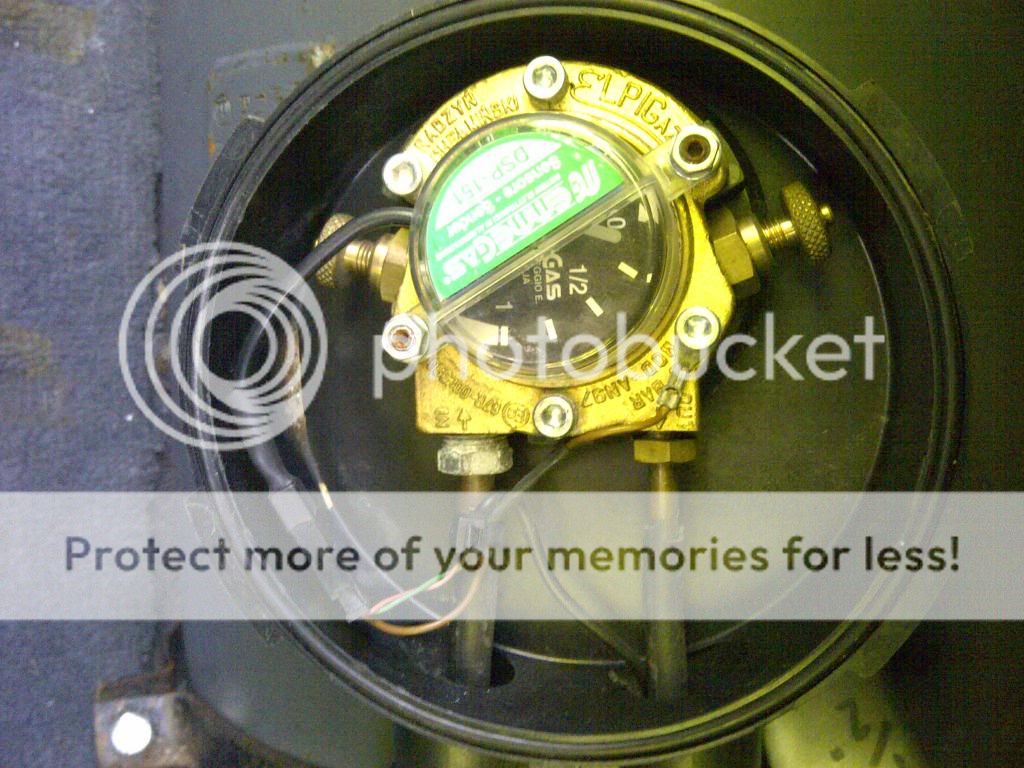
Solenoid (torpedo tank)

Solenoid (other tank - leaking PRV)

Big lump of something on back of one of the underboot tanks

T peice
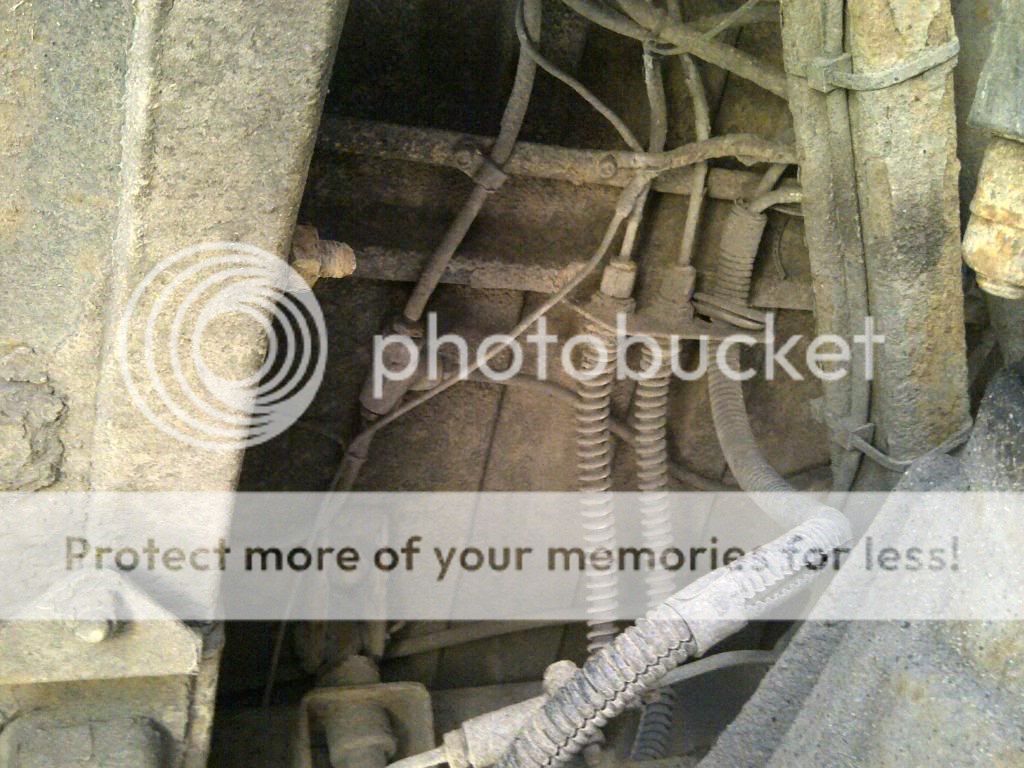
Other T peice

More to come...
Solenoid (torpedo tank)
Solenoid (other tank - leaking PRV)
Big lump of something on back of one of the underboot tanks
T peice
Other T peice
More to come...
Re: Sneezing LPG tanks - no idea where to begin!
Another update, checked the 10A fuse on the LPG system and it was a bit charred so changed it to be on the safe side. I then tried to make run it on LPG a few times and eventually it ran. The guage showed full (which is incorrect) and it sat there, idled nicely and reved nicely. WHOOOOOO!
Sun was shining etc so i took the waterproof seat covers off and I thought lets go for a nice drive up in the hills somewhere and have a nice lunch but then the fuse blew again .
.
Any ideas - something has got to be wet still from the swim but what? Im also concerned that running the LPG system of 1 10a fuse with all those solenoids isnt quite correct and i should be looking at a relay or something? According to the manuals ive downloaded. should only be a 5A fuse in there anyway so presumably the previous owner has had a similar problem so upped it.
Cant find any details on current draw but that is the only fuse powering 2 x injector simulators, Lamda control unit, switch unit, guage, stepper and at least 4 x 10watt (ish) solenoids.
Sun was shining etc so i took the waterproof seat covers off and I thought lets go for a nice drive up in the hills somewhere and have a nice lunch but then the fuse blew again
.Any ideas - something has got to be wet still from the swim but what? Im also concerned that running the LPG system of 1 10a fuse with all those solenoids isnt quite correct and i should be looking at a relay or something? According to the manuals ive downloaded. should only be a 5A fuse in there anyway so presumably the previous owner has had a similar problem so upped it.
Cant find any details on current draw but that is the only fuse powering 2 x injector simulators, Lamda control unit, switch unit, guage, stepper and at least 4 x 10watt (ish) solenoids.
Re: Sneezing LPG tanks - no idea where to begin!
OOOOps

Ran out of 10a fuses so made a little jumper (spade, wire, switch, wire, fuse holder, wire, spade) thing and put my next biggest size fuse in it which was 25a.
It started, flicked over flawlessly and ran for a few mins no problem inc reving etc then something started to smell so i immediatley flicked the switch on my jumper wire and for good measure disconnected the battery. I then looked up and some smoke grey smoke was floating up on the passenger side. Grabbed the fire extingusher id placed nearby and had a look and luckily there was no fire. I let the lot cool down, crawled under and took the above picture - notice thethe molten solenoid. At least ive found the problem. For anyone reading this in the future - dont try this at home!
Now, as i said, im not going to be doing any (more) risky jobs at the mo so short term - Can i just cut the wires leading to the melted solenoid and run the system without that tank for abit ?
I Cant work out if ill need to join the wires i'd cut together but thats no problem if i do. What do you guys reckon? If i was doing it properly - Changing the solenoid means dropping the tank out of the vehicle so carpet up, hoses off etc and id need to cut the wires either way to fit the new one and that leaves to much scope for something to go wrong.
Ran out of 10a fuses so made a little jumper (spade, wire, switch, wire, fuse holder, wire, spade) thing and put my next biggest size fuse in it which was 25a.
It started, flicked over flawlessly and ran for a few mins no problem inc reving etc then something started to smell so i immediatley flicked the switch on my jumper wire and for good measure disconnected the battery. I then looked up and some smoke grey smoke was floating up on the passenger side. Grabbed the fire extingusher id placed nearby and had a look and luckily there was no fire. I let the lot cool down, crawled under and took the above picture - notice thethe molten solenoid
. At least ive found the problem. For anyone reading this in the future - dont try this at home!Now, as i said, im not going to be doing any (more) risky jobs at the mo so short term - Can i just cut the wires leading to the melted solenoid and run the system without that tank for abit ?
I Cant work out if ill need to join the wires i'd cut together but thats no problem if i do. What do you guys reckon? If i was doing it properly - Changing the solenoid means dropping the tank out of the vehicle so carpet up, hoses off etc and id need to cut the wires either way to fit the new one and that leaves to much scope for something to go wrong.
Re: Sneezing LPG tanks - no idea where to begin!
Yes, just make sure you insulate the ends. All the solenoids will be connected in parallel so as soon as the 12V appears on the wire they will all open. They should draw roughly 1A each so you might be pushing it with the number you have but not enough to take out a 10A fuse. The other thing to check is that none of the dodgy wiring is intermittently shorting to earth (dangling on a hot exhaust for instance).Bigwilly1 wrote:Can i just cut the wires leading to the melted solenoid and run the system without that tank for abit ?
96 Saab 900XS, AEB Leo, sold
93 Range Rover 4.2LSE, Lovato LovEco, sold
97 Range Rover 4.0SE, multipoint, sold
98 Ex-Police Range Rover 4.0, AEB Leo, daily motor
96 Range Rover 4.6HSE Ascot, AEB Leo, my spare
Proud member of the YCHJCYA2PDTHFH club.
93 Range Rover 4.2LSE, Lovato LovEco, sold
97 Range Rover 4.0SE, multipoint, sold
98 Ex-Police Range Rover 4.0, AEB Leo, daily motor
96 Range Rover 4.6HSE Ascot, AEB Leo, my spare
Proud member of the YCHJCYA2PDTHFH club.
-
SimonHobson
- Intermediate Member
- Posts: 1125
- Joined: Sat Aug 23, 2008 6:39 pm
- Location: Cumbria
- Contact:
Re: Sneezing LPG tanks - no idea where to begin!
OK, there is no solenoid on that - it's a fairly old unit as they've all had solenoids for some time. So, if it is in the sun there is a very good change of cross-filling from that to the other tanks even when the system is turned off. As I've never dealt with them, I'm not sure what the thumb two screws do, but I'm certain at least one of them is a shutoff valve. It's what we call a "multivalve" (because it's got multiple functions in one block) in a "single hole" tank (because it's got, well, a single hole !).Bigwilly1 wrote:Boot tank-
That's a newer multivalve that does have a solenoid.Solenoid (torpedo tank)
Ditto - looks like the same model of multivalve.Solenoid (other tank - leaking PRV)
That's the gas tight box for a 4-hole tank. These have four holes, each with a single function device fitted - fill connection and over-fill shutoff, level sensor/indicator (and possible sender for remote gauge), pressure relief valve, and outlet (should have solenoid valve). I don't know if all 4 hole valve sets always had a solenoid (perhaps one of the experts knows ?), but I doubt if it has a non-return valve.Big lump of something on back of one of the underboot tanks
Standard tees, they don't have any non-return valves in them. You should have a total of 8 tees somewhere - 4 in the fill line, 4 in the feed line.T peice
Other T peice
Given the lack of non-return valves, you will be getting some crossfeeding. That means one or more of your tanks will be getting 100% filled at some point.
Yes, as GilbertD says, just cut the wires and insulate the ends. Do NOT join them together or you'll just blow something else up.Bigwilly1 wrote:Can i just cut the wires leading to the melted solenoid and run the system without that tank for abit ?
Also, since you've had a 25A fuse in there, and it was blowing 10A fuses, you will have overloaded the relay in the gas control system. It may still be working, it may or may not have suffered damage.
The solenoids typically take around 1A each - but you don't actually have all that many (see above), so that shouldn't be a big problem.
If you add all the required solenoids - that'll make 7 in total (one per tank, plus filter/shutoff, plus shutoff on reducer) - then the total loading could well be above the rating of the gas controller. In that case you'd need to add a relay to power some of them - buy you should really keep the two at the frontend fed directly from the gas controller (feed the relay coil from the same gas controller output and use the relay contacts to supply the tank solenoids from a separate fused supply).
If you are re-wiring then I'd suggest you allow for the solenoid feeds to be separate to some point so that each can be disconnected. Having a nice neat loom where the supply branches off as needed (with proper soldered and sleeved joints) is tidy - but a problem for diagnostics
And you should :
a) run an earth wire to each solenoid (it's not a problem if this is just one wire that branches as needed). Don't earth solenoid valves to the valve body (as the earth connection in that first photo shows), tank, or some random screw on the body - bad earths are a common issue.
b) run a completely separate earth wire for the gauge sender(s), lambda probe, TPS, or any other sensor that might be fitted. There can be a surprising volt drop in the earth wires to the solenoids and this can upset the signal readings if you share earths between "power" and "signal". Take all earths to a good single point.
Land Rover 110 V8 LPG
Land Rover 90 petrol (no longer diseasel :D), still awaiting V8 & LPG
http://www.diy-lpg.co.uk
Land Rover 90 petrol (no longer diseasel :D), still awaiting V8 & LPG
http://www.diy-lpg.co.uk
Re: Sneezing LPG tanks - no idea where to begin!
They both are, one in the fill and one in the outlet.SimonHobson wrote:As I've never dealt with them, I'm not sure what the thumb two screws do, but I'm certain at least one of them is a shutoff valve.
96 Saab 900XS, AEB Leo, sold
93 Range Rover 4.2LSE, Lovato LovEco, sold
97 Range Rover 4.0SE, multipoint, sold
98 Ex-Police Range Rover 4.0, AEB Leo, daily motor
96 Range Rover 4.6HSE Ascot, AEB Leo, my spare
Proud member of the YCHJCYA2PDTHFH club.
93 Range Rover 4.2LSE, Lovato LovEco, sold
97 Range Rover 4.0SE, multipoint, sold
98 Ex-Police Range Rover 4.0, AEB Leo, daily motor
96 Range Rover 4.6HSE Ascot, AEB Leo, my spare
Proud member of the YCHJCYA2PDTHFH club.
Re: Sneezing LPG tanks - no idea where to begin!
Right guys, The good news is now ive cut the wire and im running on gas again! Its beautifully smooth with a noticeable difference as both passenger + driver  . Mega thanks for your help your all great. The next thing then is getting it all safe and redoing all the wiring and possibly lines aswell for the sake of a few quid. Sure ill save the few quid quick enough if my tanks arent crossfeeding haha.
Does anyone know about the tanks with the 4 hole box...They are very close together - is it likely they are joined and share the same "4 holes" ?
. Mega thanks for your help your all great. The next thing then is getting it all safe and redoing all the wiring and possibly lines aswell for the sake of a few quid. Sure ill save the few quid quick enough if my tanks arent crossfeeding haha.Does anyone know about the tanks with the 4 hole box...They are very close together - is it likely they are joined and share the same "4 holes" ?
Re: Sneezing LPG tanks - no idea where to begin!
This http://www.tinleytech.co.uk/acatalog/Ta ... -hole.html is what the tanks look like. There have been some custom made ones that look like two cylinders stuck together (RPi do one for the P38 and may well have done one for the Classic) but they are actually a single tank.
96 Saab 900XS, AEB Leo, sold
93 Range Rover 4.2LSE, Lovato LovEco, sold
97 Range Rover 4.0SE, multipoint, sold
98 Ex-Police Range Rover 4.0, AEB Leo, daily motor
96 Range Rover 4.6HSE Ascot, AEB Leo, my spare
Proud member of the YCHJCYA2PDTHFH club.
93 Range Rover 4.2LSE, Lovato LovEco, sold
97 Range Rover 4.0SE, multipoint, sold
98 Ex-Police Range Rover 4.0, AEB Leo, daily motor
96 Range Rover 4.6HSE Ascot, AEB Leo, my spare
Proud member of the YCHJCYA2PDTHFH club.
-
SimonHobson
- Intermediate Member
- Posts: 1125
- Joined: Sat Aug 23, 2008 6:39 pm
- Location: Cumbria
- Contact:
Re: Sneezing LPG tanks - no idea where to begin!
BTW - once someone identifies the make of multivalve, you should be able to buy a replacement solenoid coil for it.Bigwilly1 wrote:Right guys, The good news is now ive cut the wire and im running on gas again! Its beautifully smooth with a noticeable difference as both passenger + driver
Not very likely. Such tanks do exist, but are expensive.Does anyone know about the tanks with the 4 hole box...They are very close together - is it likely they are joined and share the same "4 holes" ?
If they are siamese tanks, then it'll be obvious as there'll be some pipes welded between them at top and bottom to allow liquid and vapour flow between them. It's more likely that it's two tanks and the other valve box is nestled in the gap between them. If you look under the wheel arch and over the chassis rail, you should be able to see it.
Land Rover 110 V8 LPG
Land Rover 90 petrol (no longer diseasel :D), still awaiting V8 & LPG
http://www.diy-lpg.co.uk
Land Rover 90 petrol (no longer diseasel :D), still awaiting V8 & LPG
http://www.diy-lpg.co.uk
Re: Sneezing LPG tanks - no idea where to begin!
The multivalves with blue coils are BRC Europa pattern.
www.blazegas.com
-
SimonHobson
- Intermediate Member
- Posts: 1125
- Joined: Sat Aug 23, 2008 6:39 pm
- Location: Cumbria
- Contact:
Re: Sneezing LPG tanks - no idea where to begin!
As a bit of an update, prompted by another thread ...
For the sort of temperatures we're talking about, for each 10˚C rise in temperature, the tank pressure goes up by around 2 bar (give or take a bit). So given that the internal tank has no electric shutoff and hence is always open to the outlet line, if parked in teh sun then it's easy to see it's pressure could go up by several bar. I would be very surprised if this wasn't enough to lift the plunger on the shutoffs on the other (underslung, hence out of the sun) tanks, and so cross feed back into then via their outlets.
Lately (and not uncommonly at this time of year) we've had a few days where the nights have been quite cold, and then the sun has come out in the day and would quickly heat up the inside of a car.
So I think this is a quite plausible explanation for a) the inside tank "losing contents" and b) the underslung tanks "sneezing".
For the sort of temperatures we're talking about, for each 10˚C rise in temperature, the tank pressure goes up by around 2 bar (give or take a bit). So given that the internal tank has no electric shutoff and hence is always open to the outlet line, if parked in teh sun then it's easy to see it's pressure could go up by several bar. I would be very surprised if this wasn't enough to lift the plunger on the shutoffs on the other (underslung, hence out of the sun) tanks, and so cross feed back into then via their outlets.
Lately (and not uncommonly at this time of year) we've had a few days where the nights have been quite cold, and then the sun has come out in the day and would quickly heat up the inside of a car.
So I think this is a quite plausible explanation for a) the inside tank "losing contents" and b) the underslung tanks "sneezing".
Land Rover 110 V8 LPG
Land Rover 90 petrol (no longer diseasel :D), still awaiting V8 & LPG
http://www.diy-lpg.co.uk
Land Rover 90 petrol (no longer diseasel :D), still awaiting V8 & LPG
http://www.diy-lpg.co.uk